
From Planetary Data to AI: Kunpeng Program 2026 Immerses Students in Space Research at HKU
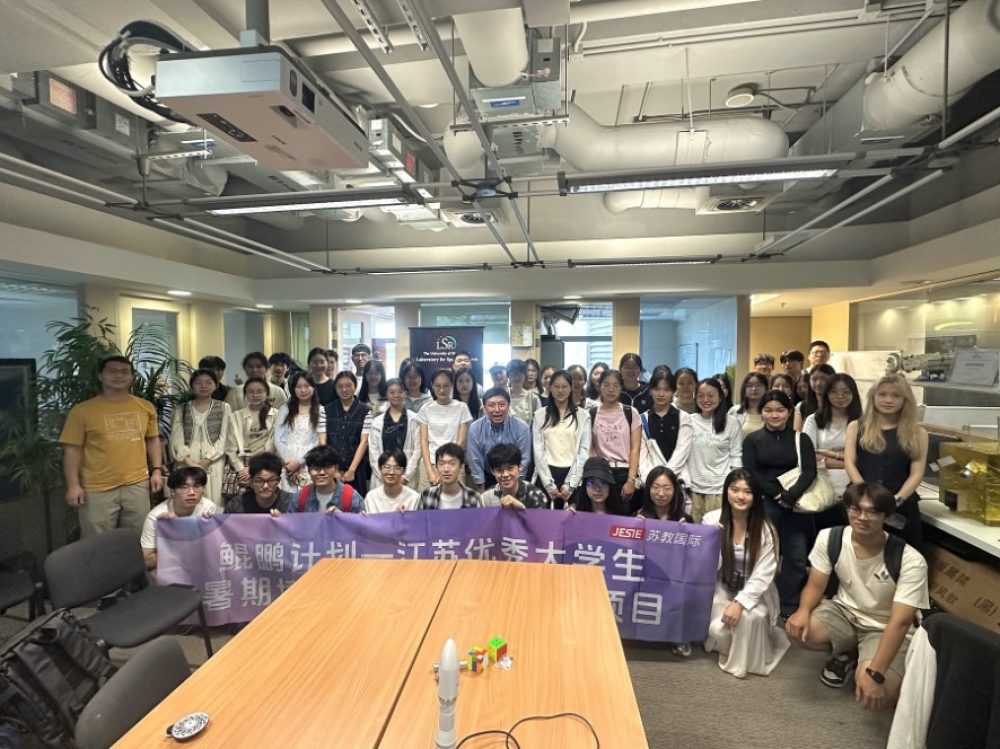
Kunpeng Program participants and instructors at the Laboratory for Space Research.
A 19-day programme jointly hosted by HKU’s Laboratory for Space Research and Department of Earth and Planetary Sciences introduced 50 undergraduates to space data, scientific computing, experimental demonstrations and AI-enabled planetary discovery.
How can students turn the growing volume of data from spacecraft, telescopes and numerical simulations into meaningful scientific results? From 11 to 29 August 2026, the Kunpeng Program 2026 gave 50 undergraduate students from universities in Jiangsu Province an opportunity to explore that question at The University of Hong Kong.
Jointly hosted by the Laboratory for Space Research (LSR) and the Department of Earth and Planetary Sciences (DEPS), the programme connected planetary science with artificial intelligence and big-data analysis. LSR contributed a multidisciplinary research environment in which students could see how space scientists combine physical models, mission observations, numerical simulations and computational tools to investigate complex planetary systems.
The curriculum covered space weather, planetary magnetospheres, aurorae, planetary surfaces, remote sensing, deep learning, AI for science and large-scale numerical modelling. Students learned Python-based analysis and worked with PyTorch, while examining how data from major planetary missions and international archives can be accessed, prepared, visualised and evaluated. The aim was not simply to teach software, but to show how every computational method must remain connected to a well-defined scientific question.
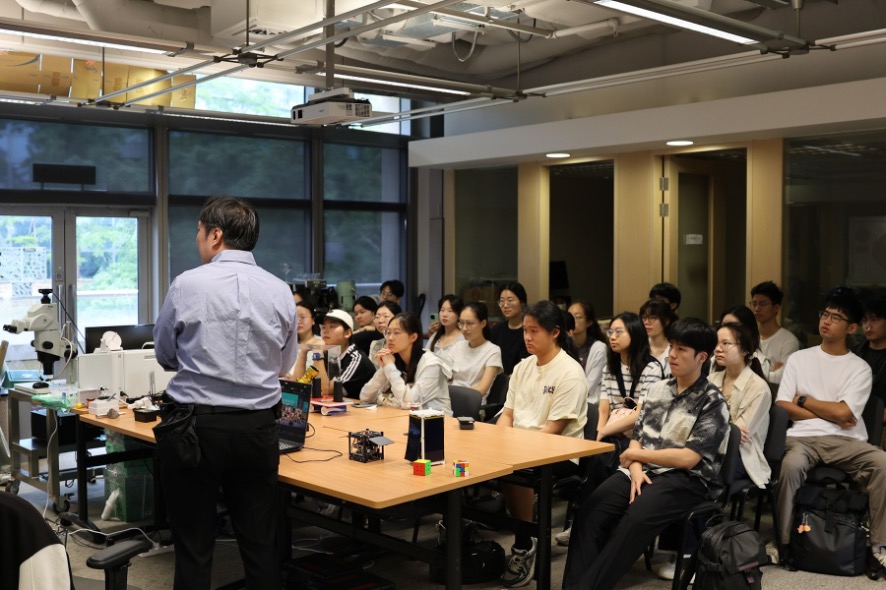
A space-science session at LSR connects physical concepts with research methods and data analysis.
Lectures were paired with practical work throughout the programme. Students explored AI-assisted auroral image classification, numerical modelling of solar eruptions and magnetospheric environments, and the interpretation of planetary remote-sensing data. These activities introduced both the possibilities and the responsibilities of data-driven science, including the need to understand data quality, test methods carefully and communicate limitations alongside results.
At LSR’s Cyberport facilities, participants encountered an open, collaborative research setting spanning planetary science, astronomy, engineering and computing. Demonstrations and small-group discussions encouraged students to ask how instruments represent physical phenomena, how researchers move between observation and simulation, and how interdisciplinary teams solve problems that cannot be addressed from a single field alone.
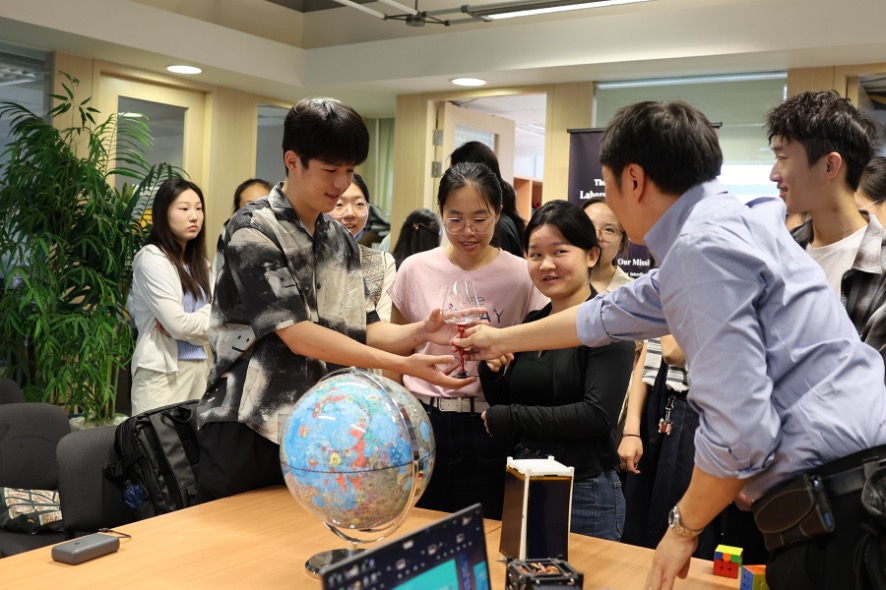
Students discuss a planetary demonstration with an instructor during a hands-on session at LSR.
Interactive demonstrations made abstract ideas more tangible. By observing experimental equipment and discussing the models represented by each setup, students could connect physical processes with the measurements, assumptions and analytical choices used in space research.
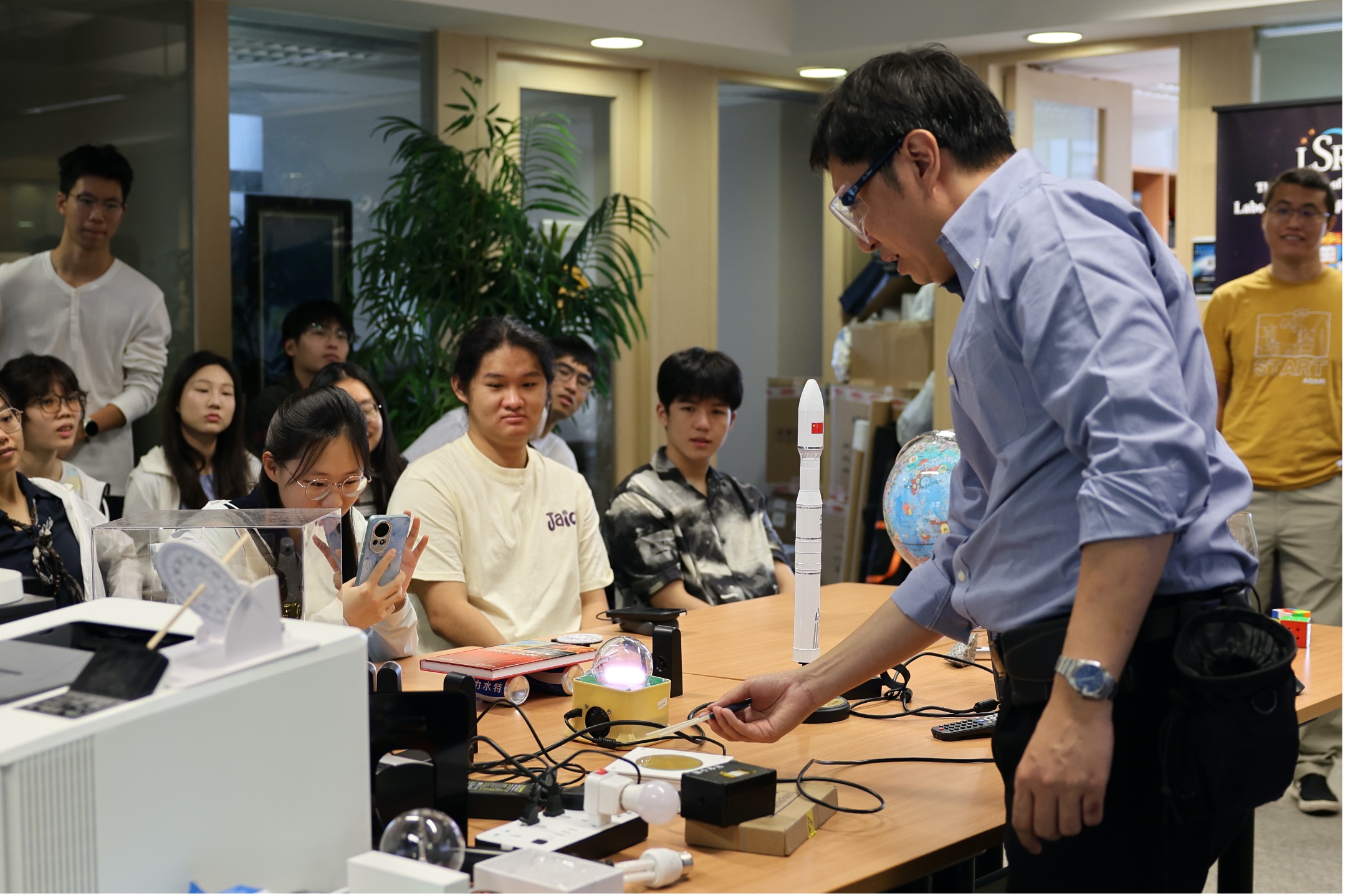
An experimental demonstration at LSR gives students a closer view of how physical concepts are investigated in practice.
The programme followed the structure of a compact research experience. After building common foundations, students worked in nine teams to define a topic, gather and process data, evaluate their findings and prepare a final presentation. On 28 August, each team presented its project to a review panel and answered questions on its scientific reasoning, analytical choices and conclusions. The process gave participants direct experience of research as iterative, collaborative work rather than a sequence of predetermined answers.
The Kunpeng Program also advanced LSR’s commitment to knowledge exchange and the development of young scientific talent. By bringing university students into contact with active researchers, research infrastructure and authentic data-analysis challenges, the programme helped make space science more accessible while maintaining the intellectual rigour of a research environment.
Participants completed the programme with practical experience in coding, teamwork and research communication, as well as a clearer understanding of how planetary science is changing in the era of AI. Their work showed that the next generation of space researchers will need to be equally comfortable asking physical questions, working with complex datasets and collaborating across traditional disciplinary boundaries.